


Keeping cricket societies buoyant through winter is vital for future of the sport – You may remember Sheffield CLS posted this Article by Ben Bloom, The Spin Newsletter, late in 2024 after he had been along to talk to us one evening. We make no apology for reminding you of it – first of all it is a lovely article – well written, amusing and typical of a cricket society meeting.
Our reason for reminding you about it is that like all societies, we need new members to ensure our society continues well into the future. More than that we need younger members too – younger could mean 40’s, 50’s, 60’s but we are more than happy to have juniors too. If we don’t recuit more youthful people who will be happy to volunteer and take on the essential roles needed for the running of the Society, we will not be able to survive for too much longer. This is not an exageration but an honest appraisal of the situation for Sheffield Cricket Lovers, The Wombwell Cricket Lovers’ Society and for many other societies around the Country.
If you love cricket, please think about coming along. We are a friendly lot and you might even enjoy it. Check out our Programme …
Off-season events need more support with the English game going through its latest existential crisis
Hidden behind trees in the gloom of dimly lit street lamps, the Lees Hall Golf Club is easy to miss on a dank autumnal evening. As I park – having turned around after initially driving straight past – and step out of my car, the only signs of life in the deserted car park come from another vehicle out of which two men in their later years emerge.
“Is this the right place for the cricket meeting?” I enquire. “It is,” one of them replies. “And I’m guessing by the fact you’re half the age of anyone else coming tonight that you’re the guest speaker.”
His assumption is correct, at least the speaker part (I am at least a decade too old for the other bit of his statement to be entirely accurate, but the sentiment remains).
On entering the golf club, something of a commotion is apparent in the main function room. The Sheffield Cricket Lovers have bought a new banner to provide a backdrop for their regular meetings, but – as the pained combined efforts of four committee members show – the latest purchase is proving harder to erect than anticipated. “I’m pleased to see it has a red ball on it rather than a white ball,” notes one attender once the task has been completed.
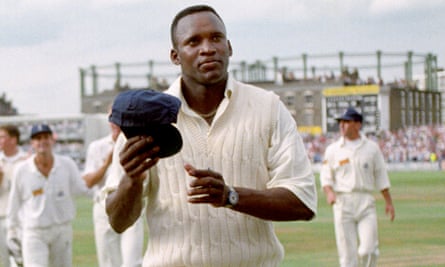
Every couple of weeks or so, somewhere in the region of 50 people head to Lees Hall, on the southern outskirts of Sheffield, for an evening in the presence of a guest speaker from the world of cricket. Sometimes it is a former England international – Devon Malcolm, Dean Headley and Craig White are among recent speakers. Other times a coach, commentator or author. Tonight, they have assembled to hear me ramble about my book, Batting for Time: The Fight to Keep English Cricket Alive, and the uncertain future of the domestic game.
It is a scene replicated up and down the country during the year’s bleakest months. Between October and March – English cricket’s traditional period of hibernation – more than 30 cricket societies host regular talks, meals and events to provide the sport’s enthusiasts an opportunity to gather during the off-season.
The Sheffield Cricket Lovers, of which Joe Root’s grandfather Don is a some-time attender, has existed since 1960. “It’s a meeting of like minds,” says vice-chair Andy Pack. “Most of the audience we have here, and at all cricket societies, will be of the mature variety. They maybe don’t get the opportunity to talk cricket to too many people because of their age and circumstances. They are also a generation that enjoys the sort of presentation that goes on at a cricket society. They might not be into YouTube or podcasts or things like that.
“It’s an opportunity to speak to people who have been involved in the game and an entry into something they have probably loved for a long time.”
English cricket, on a domestic level, is going through its latest existential crisis. The spread of franchise leagues threatening to alter the wider sport’s longstanding natural hierarchy has resulted in the controversial creation of the Hundred and a sale process many believe will change everything county cricket has stood for since the Victorian age. As players jet off to play in lucrative leagues from South Africa to Canada, and India to Zimbabwe, more questions emerge over how the county structure can continue and what its purpose is.
To many cricket lovers, the community aspect of county clubs and societies – who, unsurprisingly, have a hefty crossover in membership base – is paramount. At Somerset, for example, the club’s foundation hosts monthly Walkers & Talkers events throughout winter, inviting members to chat to one another and invited guests, while strolling around Taunton’s County Ground.
Rob Kelly, the Norfolk Cricket Society secretary, suggests their group’s social value is at the heart of its monthly events. “It’s an opportunity to converse and keep in touch with people outside of the cricket season,” he says. “There’s a wellbeing element to it. During the dark winter months it provides people with a bit of focus.”
Yet, as noted by the arrivals in the Sheffield golf club car park, a common struggle between the societies is an ageing demographic. Mirroring the endless wranglings over domestic first-class cricket, their future is a worry. “We are trying to attract younger people but I’m in my 50s and probably the youngest person we get regularly is in his mid-40s,” says Kelly.
Sign up to The Spin
Free weekly newsletter
Subscribe to our cricket newsletter for our writers’ thoughts on the biggest stories and a review of the week’s action
Enter your email addressSign upPrivacy Notice: Newsletters may contain info about charities, online ads, and content funded by outside parties. For more information see our Privacy Policy. We use Google reCaptcha to protect our website and the Google Privacy Policy and Terms of Service apply.
after newsletter promotion
“It is a concern, but we’re enjoying it while it lasts.It is sad when I look back 10 years at a list of people who came on any given night and there are those who are unfortunately no longer with us.
“We’re always trying to attract new members. We all put on a good evening and want more people to come along because it’s a nice thing to come to. At the moment I’m still positive about it, but I don’t look too far into the future.”
There are about 4,000 cricket society members in Britain, gathering to chew the fat during the autumn/winter months. At the Derbyshire Cricket Society, the first hand up during my post-talk Q&A results in an unexpected barrage over the ECB’s recently amended transgender policy.
At the Yorkshire Southern Group, it shamefully takes me an hour – “So did you used to play cricket yourself?” rapidly surging to the top of daft questions I have asked someone – to realise the person I have been happily chatting to over lunch is the former Yorkshire and England all-rounder Richard Hutton, son of the great batter Sir Len Hutton.
Every society meeting promises surprises, informed discussion and no shortage of passion. The first delivery of the new season would be a longer time coming without them.
This is an extract from the Guardian’s weekly cricket email, The Spin. To subscribe, just visit this page and follow the instructions.
Explore more on these topics